Best Fiction
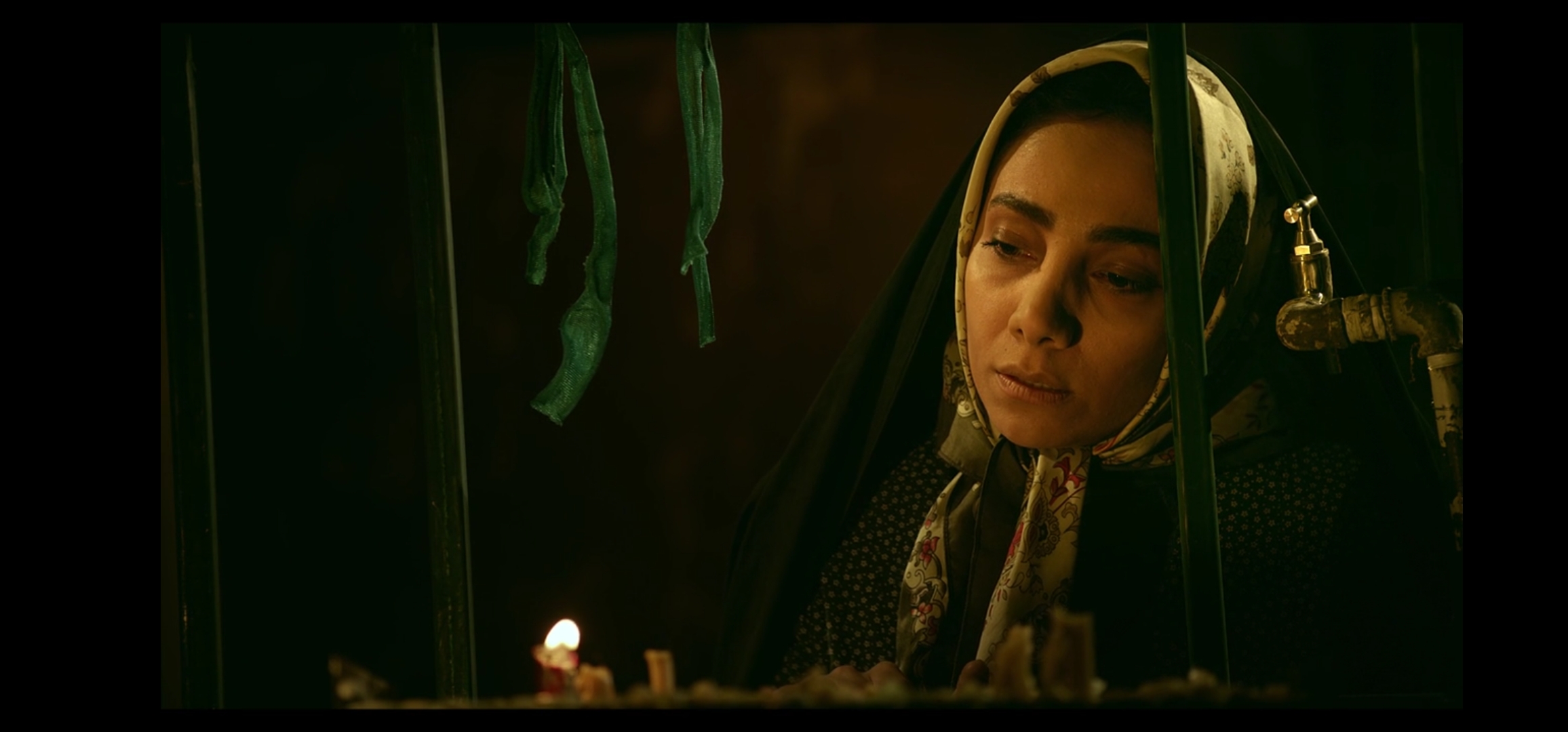
The Theft
The winner in the fiction category deals with a subject that affects practically everyone. Poverty, and child poverty in particular, leaves no one unmoved. It is so widespread worldwide that in more privileged countries it has led to the creation of baby hatches, while in less developed countries, parents and children are simply left to their fate.
In other words, “being moved” – an emotional lever that is time and again a powerful way to generate attention with a story. Fittingly, “The Theft” tells the story of a desperate young woman who slips through the alleys at night with her newborn child, wrapped in rags in a simple basket. After long hesitation, she leaves it in a doorway, hoping a merciful God will take pity.
The film is deliberately shot in a rather unspectacular way, with the lead's performance almost exaggerated, because it is successfully leading us down a false trail: as chance would have it, an experienced, visibly kind-hearted mother now comes along, sees the little bundle in its basket, picks it up decisively, and goes decisively on her way.
We still hear the heart-wrenching cries of the little child. When the young mother checks once more, she – and we with her – experience a truly well-crafted surprise, and the film takes its turn. With calm, unhurried filmmaking, “The Theft” tells a surprising, worldly-wise story.
Best Documentary
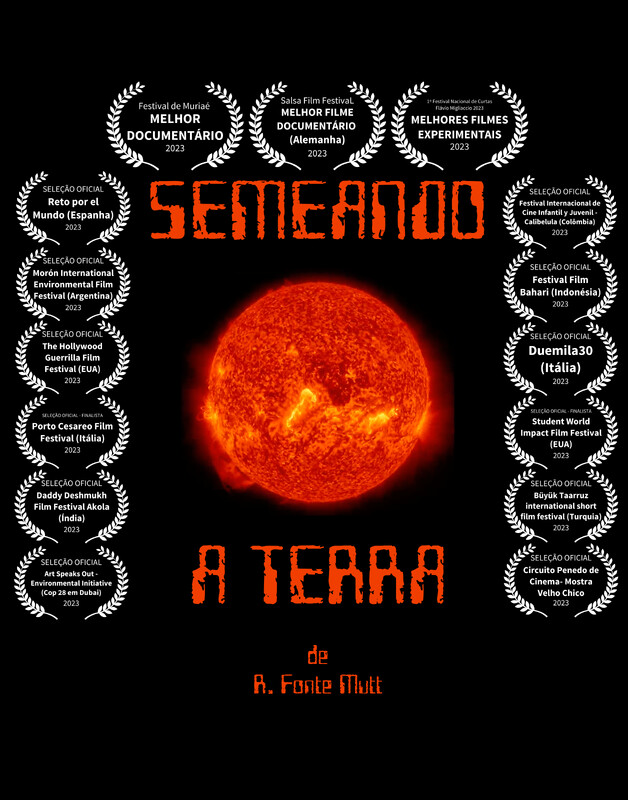
Sowing the Earth
Director: R. Fonte Mutt
Within the first 2 minutes of this 9-minute film I was bored, disappointed, then slightly interested and finally fascinated. Sowing the Earth starts with superboring Johann Strauss „Die schöne blaue Donau“ (“The Blue Danube”) – give me a break – and then comes up with some time-lapse takes of growing seed – really? To develop this into the jury's choice for the best documentary of a festival with over 2,000 entries, doing so with a budget of merely $1,000 and with only 7 minutes left – that is a masterpiece.
The director of Sowing the Earth, R. Fonte Mutt, is from Brazil, where climate care and taking care of the rainforest play a very particular role. Fonte Mutt describes his work this way: “Mother Nature gives gifts: she distributes her fruits, her medicine, clean air and all her beauty to those who treat her well.” But human beings just don't treat this mother well, we might add.
Sowing the Earth is a documentary, and it is not. Major parts of this narrative do indeed document the beauty of the power of nature on the one hand and our destroying of planet Earth on the other. But then the film leaves the path of a documentary and pictures a future in which nature regains power over mankind – and makes you feel very good about it. Sowing the Earth ends in a dystopian vision where mankind doesn't play a role on this planet any more – a horror scenario, or the opposite? Up to the audience.

Best Animation
Piano in the Bushes
Director: Dashka Dementeva
I am reading out a tribute by Prof. Simon Frisch here, which I have taken the liberty of adding a little to.
The film “Piano in the Bushes” is a student project by Dashka Dementeva and her debut work. That is remarkable, as it convinces through rigour of form, care in detail and a consistently fine poetry in its storytelling. It is also pleasing that the work is from this year, rather than having toured festivals for the past 15 years.
In Piano in the Bushes, the images are drawn as animated hand-drawings whose lines pulse gently throughout. This keeps not only the film's craftedness constantly present in our awareness, but also makes its imagery and world feel animated by a breath of its own.
The film creates a particular poetry through a crossing of surrealist depictions of the characters' bodies (both human and animal) with a thoroughly everyday story. Through sophisticated perspectives on events, the action is, quite literally, given multiple facets and poeticised as well: from some angles the everyday becomes surreal, from others the surreal becomes everyday.
In the carefully crafted sound design, objects and movements are given very realistic sounds, lending the film a convincing, stable sense of space and worldliness. The film's constant, latently present sense of being crafted, combined with its atmospheric power and efficiency, make “Piano in the Bushes” a cinematic poem.
“It is a cinematic poem about love that, in its scant seven minutes, achieves the power of some of the most beautiful love films in cinema.” So says Simon Frisch. I may add: “and the film is fun too” — which is why it receives our first place in the animation category.
Best Children's Film
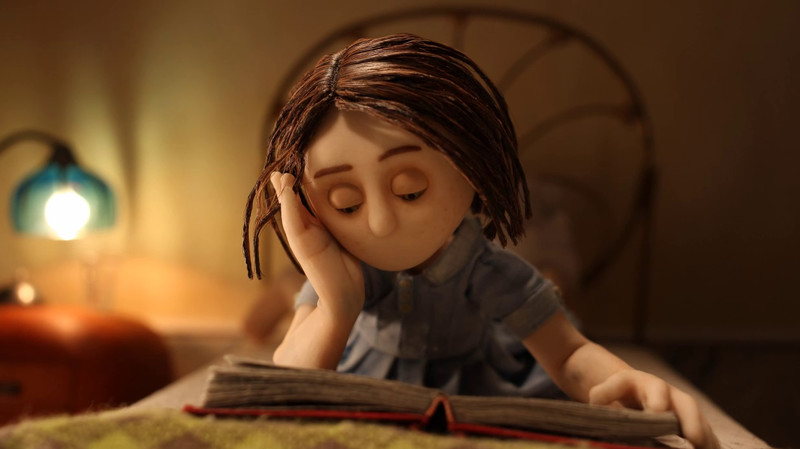
Ana Morphose
With poetic imagery, this stop-motion puppet film draws us in from the very first moment.
A little girl is absorbed in a wondrous, nature-magic book and eventually finds herself inside the fantasy world of that very book.
The animation of the protagonist impresses with its unusual liveliness and psychological coherence. Using simple means of gesture and expression, the filmmakers succeed in conveying what is happening deep within the protagonist, awakening the audience's empathy and truly touching us.
Throughout, the film always stays at eye level with its main character. Together with her, we plunge into a surreal-seeming, breathtaking and poetic fantasy world.
In its inventiveness, its look and feel, and its inspired execution, this film is a small masterpiece that can delight children and adult viewers alike.
Student Jury Award
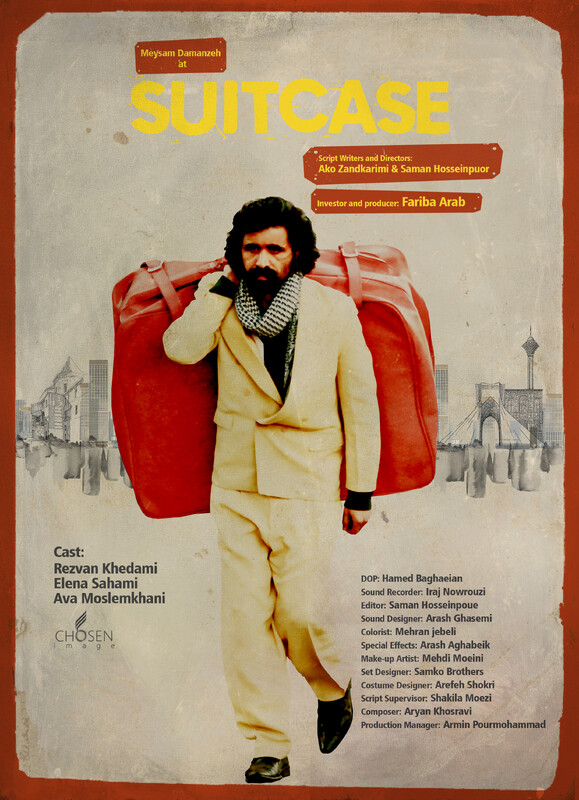
Suitcase
Director: Ako Zandkarimi, Saman Hosseinpuor
Our three favourites were Suitcase (Saman Hosseinpuor, Ako Zandkarimi), Drown The Name (Florencia Silva, Verónica Albornoz, Muriel Sago) and PIG (Jorn Leeuwerink). We chose Suitcase as the best film.
We especially liked the sound and colour design. Together with the framing and the design of the backgrounds, the film had a distinctive visual style, which, contrasted with its rather bleak plot, stuck with us. We also found the motif of the suitcase, and the questions of home and belonging it raises, fascinating.